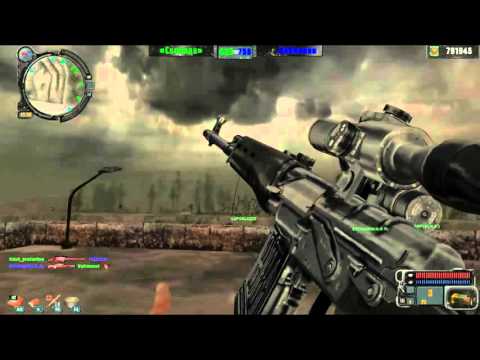
Stalker Call Of Pripyat Multiplayer
DeltaV™ Simulate lets you use all DeltaV software for training and development without purchasing duplicate control hardware and on-line system licenses. This means you can use exactly the same software provided with your actual DeltaV system at a fraction of the cost. DeltaV™ Configuration Software Suite DeltaV Manage all aspects of your system configuration including hardware configuration, history, OPC, batch control strategies and control strategies in workstations, controllers and even field devices using the DeltaV™ Configuration Studio software suite. Delta v dcs control systems.
It’s been nearly a decade since the launch of STALKER: Call of Pripyat, the last of Ukrainian studio GSC Game World’s trilogy of bleak and atmospheric open-world survival shooters. It is memorable for being set in a fictionalised and incredibly haunted vision of the Chernobyl Exclusion Zone, which is not only irradiated but overrun with reality-warping anomalies and mutant monsters.The series puts you in the shoes of freelancing mercenaries – the titular STALKERs – wandering this horrific environment in search of fame, glory, or perhaps just a big payout.STALKER has developed a strong modding scene with an appropriately devil-may-care attitude regarding the reuse of each other’s work, and even the legal status of the games themselves. It would be foolish to try to summarise even half of the mods produced, so instead, let’s take a look at the three titanic projects that define the STALKER mod scene as it stands today, each one built on a foundation of dozens of smaller projects and two standalone releases.This should help tide you over to 2021, the year GSC Game World estimates for. So, here we present, in order of their accessibility to newcomers, the Big Three. STALKER: Lost Alpha: Developer’s CutBy Dezowave The original STALKER: Shadow of Chernobyl was a bit of a mess.
After nearly a decade, Stalker: Call of Pripyat's Gunslinger mod is in open beta. By Christopher Livingston News You can finally check out the mod's overhauled weapons, realistic new animations.
The result of years of protracted development hell, it was buggy at launch, and had swathes of planned content left on the cutting room floor. Lost Alpha is a community passion project that picks up the pieces. It is the result of poring over details from leaked test builds of the game, design documents, and early magazine previews, from which the fan team then assembled their own version of the game. This is the game STALKER could have been.More punishment? Here are the on PCDespite retelling the story of the original game, albeit with a few more cutscenes and quests to improve coherence, Lost Alpha introduces a slew of new features.
The majority come from later games in the series – Call of Pripyat’s weapon upgrade system, for example – but many are entirely new. The most liberating is the ability to purchase and maintain vehicles to drive around the greatly expanded world map, while the larger environments allow more room for the AI factions to live and breathe, lending the Zone a new and unpredictable edge.Lost Alpha also tries to increase immersion through basic survival simulation aspects. Food, water and sleep are important, although not as demanding or frustrating as they initially sound.
Inventory management is a little more complex too, with your backpack and combat-accessible toolbelt (make sure you put your bullets in there) becoming separate panels.The end result is both nostalgic and exciting for what it adds, while also becoming more accessible for newcomers – an aspect underscored by the inclusion of a slickly-produced PDF manual. Lost Alpha is a visual treat so long as you’ve got a PC capable of running it. Built on a much later release of the original’s X-Ray engine, you’ll need a beast of a rig to dial the game up to its higher settings, but it is scaleable enough as to run decently on just about any recent gaming PC. That said, an SSD helps mitigate some long load times enormously regardless of your machine. STALKER: Call of ChernobylBy Team Epic Call of Chernobyl is the most straightforward of the big three STALKER mods. As far as game mechanics go, it is as plain as they come, and no more advanced in the graphics department than Call of Pripyat.
But that is not a mark against it given that the main appeal of this mod is found elsewhere: CoC is a huge, non-linear sandbox. It is an ideal next step for players who have completed at least one game in the trilogy and now want to explore.Call of Chernobyl features a huge non-linear world consisting of every map from all three original games, plus several all-new environments. While there is an optional Story Mode offering some direction, it is easily eschewed in favour of more free-form play. Pick a character from any faction, complete missions, explore, and scavenge. It is the core elements of STALKER without any of the fluff, and lets the AI factions – human, monster, and animal alike – do their thing unrestricted, capturing locations, getting into fights, and generally making the world feel alive.Call of Chernobyl features a few alternative play modes, including a zombie survival scenario, but the best of them is absolutely Azazel mode.
It is part roguelike and part quantum leap, in which dying immediately transplants you into the body of your nearest squadmate – or a random NPC if you haven’t picked up any friends.A huge, non-linear worldIt is not uncommon to find yourself on the opposite side of a battle after death, or even in the shoes of the man who just killed you. Dying in games is very rarely this exciting: one untimely death might lead into a dangerous (and potentially ironically lethal) quest to find your previous loot-laden corpse.Rather pleasingly, Call of Chernobyl also has a burgeoning mod scene of its own, with add-ons ranging from weapon packs to AI overhauls, and quite a few rebalances. You are free to tweak, tinker, and tune until you get the STALKER sandbox you are happiest with. MISERYBy Misery Development Ltd Billed as a ‘full-concept modification’, Misery lives up to its name.
Picture it as a gruelling depiction of a life scavenging for money, ammunition, and meaning in a hellish wasteland that chews up and spits out human spirit. Get used to seeing the world through the grimy, damp visor of your helmet, with only the barest hints of a HUD to orient you in the world and help you manage the minutiae of daily life in the Zone.Misery is a gorgeous-looking modAs depressing and bleak as Misery is, it is an often gorgeous-looking mod, especially in terms of texture detail and lighting. This comes at the cost of higher detail settings absolutely trashing even high-end gaming PCs – beyond even Lost Alpha’s efforts. But at least you can watch the developers’ live-action intro video before your rig crashes. The short further drives home the desperate, lonely atmosphere of Misery, instilling a sense that the devs have suffered to create this art, and want you to suffer with them.The STALKER games were never easy, but Misery is positively cruel.
For less masochistic players, the mod does offer reduced difficulty with ‘Rookie’ mode, which you can choose during installation. Lower AI weapon accuracy, reduced damage taken, and a slightly less brutal economy does drastically raise your survivability, but only to the point of it taking two or three solid bursts of gunfire to kill you instead of just one.To enjoy Misery you must immerse yourself totally in the harrowing situation, both in and out of combat. Long-term survival requires you to strip old weapons for parts and use precious glue and fabric to maintain your own equipment. There are a thousand fiddly pieces added here and an absurd number of new items to use or sell.
It is intense and demanding, but given that it is currently ranked as the single most popular mod on ModDB, there is clearly a market for this bleak survivalist simulation.The Misery team’s ambitions don’t end there, either – with the release of version 2.2, they now plan on officially porting their mod to support Call of Chernobyl, in all its free, standalone enormity, effectively creating a sprawling gestalt hybrid. A true standalone sandbox simulation of life in one of the worst places on Earth imaginable. If nothing else, Azazel mode will help the bitter pill of sudden death go down a little easier.
| S.T.A.L.K.E.R.: Call of Pripyat | |
|---|---|
| Developer(s) | GSC Game World |
| Publisher(s) |
|
| Producer(s) | Sergiy Grygorovich |
| Designer(s) | Andrey Verpakhovsky |
| Programmer(s) | Dmitry Yasenev |
| Artist(s) | |
| Composer(s) | Aleksey Omelchuk |
| Series | S.T.A.L.K.E.R. |
| Engine | X-Ray Engine |
| Platform(s) | Microsoft Windows |
| Release |
|
| Genre(s) | First-person shooter, survival horror |
| Mode(s) | Single-player, multiplayer |
Izotope ozone 5 reverb download. S.T.A.L.K.E.R.: Call of Pripyat is a first-person shootersurvival horror video game developed by Ukrainian video game developer GSC Game World for Microsoft Windows. It is the third game released in the S.T.A.L.K.E.R. series of video games, following S.T.A.L.K.E.R.: Shadow of Chernobyl and S.T.A.L.K.E.R.: Clear Sky, with the game's narrative and events following the former. It was published in the CIS territories by GSC World Publishing in October 2009, before being released by Deep Silver and bitComposer Games in North America and the PAL region in February 2010.
Gameplay[edit]
The game takes place inside the Chernobyl Nuclear Power Plant Exclusion Zone in Ukraine, divided into three areas known as Zaton, Yanov (including Jupiter and Kopachy), and ghost city of Pripyat. Each of these is a large playable area. The majority of Call of Pripyat's gameplay focuses on a combination of both post-apocalyptic horror, as well as tactical role-playing action.[1]
Receiving damage will usually cause bleeding, which the player must take care of with medical supplies. Similarly, unmaintained weapons and some equipment will be damaged from continued use. The condition of an item is displayed as a gauge next to the entry in the player's inventory. If severely damaged or broken, a red HUD icon will denote this.
The Zone features a limited economy, with traders and inhabitants exchanging goods and services for money and items. The game's trading system differs from the previous editions in that weapons and armor that have degraded past a certain point are unable to be sold until they are repaired, at which point the repair costs usually offset the sell price. Traders also sell information on missions and are keen to buy valuable documents.
Bandits are members of the criminal underworld who came to the Zone for different reasons; to make money by selling artifacts, hide from the law or to trade in weapons. The Zone is full of Bandits, ranging from common thugs to serious criminals, most of whom are members of one gang or another. Although the Zone gangs frequently fight amongst themselves, the criminal element still poses a serious problem for normal Stalkers. Bandits are ruthless and generally hostile to anyone not in their gang. Though depicted in Clear Sky as a united, highly territorial faction, the Bandit population in Shadow of Chernobyl consists mainly of roving groups.
Upgrading has three tiers of improvement, with each one requiring a toolkit to allow for respective tier upgrade/modification. Basic tools will allow the player to access the first tier and fine tools will allow access to the second tier. The calibration tool kits are only found in Pripyat and will give access to the last tier. The upgrade system is similar to that of Clear Sky except that the negatives of upgrades are removed. Upgrading a certain element still makes alternative upgrade options unavailable.
Various mutant creatures roam the Zone, most of which are hostile to Stalkers and will pursue and attack people who get too close. Artificial intelligence has been overhauled since the previous two games and now offers these creatures advanced and more realistic behavior. New mutants not present in Shadow of Chernobyl and Clear Sky include the Burer, a dwarf-like monster in a hoodie with telekinetic powers; and the Chimera, a Cerberus-like dog with deadly strength.
Several factions reside in the Zone: Loners, Bandits, Mercenaries, Scientists, Zombified Stalkers, Military, Monolith, Duty, and Freedom, the two latter ones being ideologically motivated; control and anarchy, respectively. Despite the Yanov station cease-fire, fights will occasionally break out outside designated Safe Zones. At some certain spots of Zaton and Jupiter groups of Mercenaries, both neutral and hostile to the player, appear. The player's relations to the factions are commonly neutral. However, Zombified Stalkers and Monoliths are hostile towards all characters.
Each day at random times in the game, 'emissions' will occur: The ground will shake, an indication of the Noosphere's damaged structure is unable to hold back any longer and is about to eject lethal amounts of cascading psychic energy. The player will be warned two minutes in advance of an upcoming blowout, and must find a predesignated shelter so as not to be exposed to the psychic fallout. The sky will turn red as the blowout passes through the player's region, killing everything outside of a shelter. The player can, however, survive outside of a shelter during a blowout if he consumes special drugs that temporarily shut down his nervous system, which will cause the player to be immune to the psychic activity, thereby passing out and waking up after the blowout. Blowouts can cause new artifacts to be spawned in the anomaly fields.
Artifacts are found in or around anomalies. Players have to use special detectors to bring artifacts into the visible spectrum, as they are naturally invisible. Every time an Emission occurs, each anomaly field has a chance of creating a new artifact within its wake. These artifacts can be sold, be put into artifact slots that are incorporated into suits that the player can wear and are occasionally given as rewards for services rendered. Primarily, artifacts serve as a means to enhance the player's abilities, dependent on which artifact the player has put into his artifact slot. Most are modular and can be used in conjunction with other artifacts, or multiple artifacts of the same kind can be used to multiply their effects. Most of these artifacts emit harmful radiation, limiting their usage to short periods of time. Radiation-reducing artifacts can be used to counter this effect.
In the free play mode, the player may traverse the zone and finish all of the missions that were not finished. The player is also able to obtain hidden artifacts and unlock achievements.
Plot[edit]
The game takes place soon after the events of S.T.A.L.K.E.R.: Shadow of Chernobyl. After Strelok disables the Brain Scorcher, multitudes of stalkers rush to the centre of the Zone, hoping to find rare artifacts and other rumoured treasures. The government of Ukraine takes advantage of this gold-rush and launches 'Operation Fairway,' a large scale helicopter special recon mission intended to scout the area by air in preparation for a full-scale military assault on the Chernobyl Nuclear Power Plant. Despite thorough preparations, the mission goes horribly wrong, and all five STINGRAY helicopters crash. The player, Major Alexander Degtyarev, an experienced stalker and SBU agent, is sent into the Zone to investigate the crash sites on behalf of the Army.
During the course of his investigation, Degtyarev learns that the helicopters were disabled in the air by powerful shocks of electricity. He also confirms via a helicopter black box that the military survivors have gone to an evacuation point somewhere in Pripyat. However, the city is sealed off due to The Zone's environment. The Major eventually finds an underground passageway to Pripyat and gathers a small team of stalkers to help him traverse this tunnel. After fighting through mutants and the mysterious Monolith faction, they reach the abandoned city and link up with the military survivors from the helicopter crashes.
The player eventually meets the protagonist of Shadow of Chernobyl, Strelok, and learns of the secrets behind the Zone, including how anomalies change position during and after each emission – explaining why the helicopters crashed in the first place.
The game concludes with the survivors, Strelok, and the player evacuating the Zone while being attacked by hordes of enemies. Before boarding the rescue helicopters, the player is given the choice to leave the Zone forever or stay. If the player decides not to leave the Zone, then the game enters into free-play mode. During free-play mode, the player can freely explore areas and finish side-missions, while given the option to leave at any time through NPCs.
The game's ending differs depending on the actions of the player during the game. How the player handles in-game missions, and whether certain NPCs are alive or not by the end of the game directly affect the ending sequence. Despite different endings, one thing that remains the same is the belief that the Zone is expanding, and might actually encompass Russia and the rest of Europe.
Development and release[edit]
Call of Pripyat utilizes the X-Ray Engine 1.6, allowing advanced modern graphical features through the use of DirectX 11 to be fully integrated; one outstanding feature being the inclusion of real-time GPUtessellation. Regions and maps feature photo realistic scenes of the region it is made to represent. There is also extensive support for older versions of DirectX, meaning that Call of Pripyat is also compatible with DirectX 9 through 11. The game is AMD Eyefinity validated.[2]
The game has a Limited Special Edition, released only in Germany, that features an A3-sized map of the Zone, 2 faction patches, a stalker bandanna and a 'stalker' lighter, as well as the metal case in which the game is included. Also another Special Edition, released in the rest of Europe, that includes Art Cards, an A2-sized map of the Zone and the Soundtrack CD, was released. In North American territories, a Collector's Edition has been released, containing a smaller version of the Zone's map, a tech-tree poster and stickers. Call of Pripyat is also available through multiple digital distribution outlets.
Reception[edit]
| Reception | ||||||||||||||||||||||||||||||
|---|---|---|---|---|---|---|---|---|---|---|---|---|---|---|---|---|---|---|---|---|---|---|---|---|---|---|---|---|---|---|
| ||||||||||||||||||||||||||||||
Call of Pripyat received 'favorable' reviews according to the review aggregation website Metacritic.[3] The game was lauded for its well optimized engine with relatively few bugs and glitches, for example, GameSpot said, 'The most stable S.T.A.L.K.E.R. game yet also happens to be the most atmospheric and compelling.'[7] Other reviews by websites previously opposed to new titles in the series have also given Call of Pripyat positive reviews. While Eurogamer rated the S.T.A.L.K.E.R. franchise's previous installment (Clear Sky) to be a significant disappointment, they gave more positive feedback in their review of the recent addition, saying 'Only the slight sensation of datedness prevents this from scoring higher, and no doubt once the mods start flowing the value for money will get even better. But there's plenty here to keep the faithful feeling extremely optimistic about the prospect of a proper sequel. And there's still nothing out there quite like STALKER.'[5]
Though the reviews of the game's artificial intelligence system were positive, GameSpot did note that the combat AI at times seemed unfairly good, and that 'Human enemies facing away from you have the uncanny ability to notice when you peek out a window behind them and are remarkably good shots in the dead of night, even without night vision scopes equipped.' However, '[D]espite a bit of cheating, Call of Pripyat rarely feels unfair.'[7]
Call of Pripyat was entered in PC Gamer's Top 100 PC games of all time in 2011,[14] ranked in 38th place.
References[edit]
- ^'Description-S.T.A.L.K.E.R. Call of Pripyat'. GSC Game World. Retrieved 20 January 2011.
- ^'AMD Eyefinity Validated and Ready Software'. AMD Eyefinity.
- ^ ab'S.T.A.L.K.E.R.: Call of Pripyat for PC Reviews'. Metacritic. CBS Interactive. Retrieved 23 April 2018.
- ^Edge staff (March 2010). 'S.T.A.L.K.E.R.: Call of Pripyat'. Edge. No. 212. Future plc. p. 95.
- ^ abPearson, Dan (2 February 2010). 'S.T.A.L.K.E.R. Call of Pripyat'. Eurogamer. Gamer Network. Retrieved 8 February 2010.
- ^'S.T.A.L.K.E.R.: Call of Pripyat'. GamesMaster. Future plc. March 2010. p. 66.
- ^ abcVanOrd, Kevin (2 February 2010). 'S.T.A.L.K.E.R.: Call of Pripyat Review'. GameSpot. CBS Interactive. Retrieved 23 April 2018.
- ^Manion, Rory (3 February 2010). 'S.T.A.L.K.E.R.: Call of Pripyat Review'. GameSpy. Ziff Davis. Retrieved 23 April 2018.
- ^Hopper, Steven (5 February 2010). 'S.T.A.L.K.E.R.: Call of Pripyat – PC – Review'. GameZone. Archived from the original on 8 February 2010. Retrieved 23 April 2018.
- ^Onyett, Charles (5 February 2010). 'S.T.A.L.K.E.R.: Call of Pripyat Review'. IGN. Ziff Davis. Retrieved 23 April 2018.
- ^'S.T.A.L.K.E.R.: Shadow of Pripyat'. PC Format. No. 237. Future plc. March 2010. p. 90.
- ^'S.T.A.L.K.E.R.: Call of Pripyat'. PC Gamer UK. Future plc. March 2010. p. 90.
- ^'Review: S.T.A.L.K.E.R.: Call of Pripyat'. PC PowerPlay. No. 174. Next Media Pty Ltd. February 2010. p. 58.
- ^PC Gamer staff (16 February 2011). 'The 100 best PC games of all time (Page 7)'. PC Gamer. Future plc. Retrieved 23 April 2018.
External links[edit]
| Wikimedia Commons has media related to S.T.A.L.K.E.R.: Call of Pripyat. |
- S.T.A.L.K.E.R.: Call of Pripyat at MobyGames